
1 August 2026 · 12 min read
What is a Recovery Suite? Definition, Benefits, and Performance Science
What if the most productive hour of your working week didn't happen at your desk, but inside a cedar-clad sauna or a temperature-controlled ice bath?

What if the most productive hour of your working week didn't happen at your desk, but inside a cedar-clad sauna or a temperature-controlled ice bath? Many high-performing professionals find themselves trapped in a cycle where intense training leads to burnout, and persistent muscle soreness begins to chip away at daily focus. This guide offers a precise "recovery suite" definition and demonstrates how these specialist facilities shift restoration from an optional luxury to a fundamental pillar of long-term progression.
Please note: This content is for informational purposes only and is not professional medical advice. Always consult with a doctor or a qualified medical professional before beginning any new physical recovery protocols or health treatments.
Defining the Modern Recovery Suite: More Than Just a Gym Spa
For those committed to consistent progression, the traditional "rest day" often feels like a missed opportunity. Whilst sitting on the sofa might offer a break from movement, it does little to actively repair the physiological strain of a high-intensity session. A precise "recovery suite" definition describes a performance-optimised environment designed to systematically accelerate physiological repair through controlled environmental stressors, such as heat and cold.
Unlike a standard leisure centre sauna or a basic home setup, a professional suite is built for purpose. It's a bridge between intense physical exertion and the mental clarity required for a demanding career. Instead, these spaces focus on "performance maintenance," treating your body like the high-end machine it is.
The Core Philosophy: Restoration vs. Relaxation
It's easy to confuse a recovery suite with a traditional spa, but their objectives are fundamentally different. A spa prioritises mental escapism and relaxation; a recovery suite prioritises physiological restoration. By utilising tools like Contrast bath therapy, these suites force the body to adapt, improving circulation and reducing inflammation in a way that passive rest simply cannot match.
Why Busy Professionals are Prioritising Recovery in 2026
In the high-pressure environment of the City, the "all-on" lifestyle can lead to chronically elevated cortisol levels, which stalls both physical gains and mental sharpness. By integrating sessions at a dedicated independent gym facility, professionals can lower stress hormones whilst simultaneously repairing the body.
The Essential Components: Sauna, Ice Bath, and Contrast Therapy
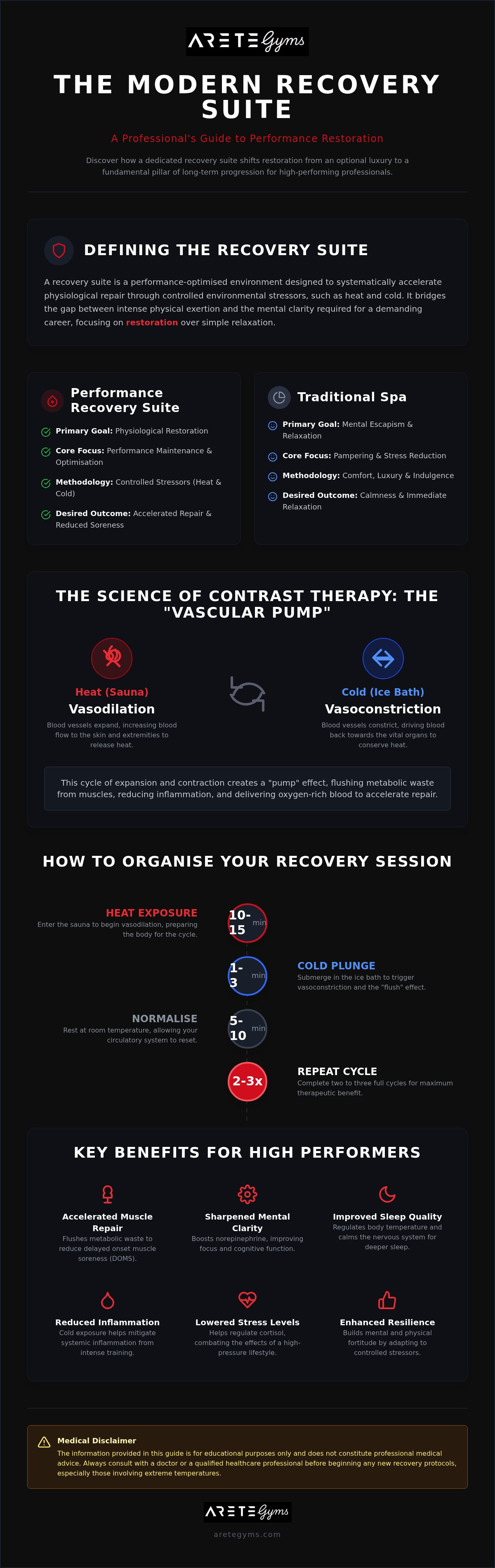
A professional suite isn't just a collection of rooms; it's a system designed to manipulate your circulatory system for specific outcomes. When you alternate between a high-temperature sauna and ice bath, you're engaging what specialists call a "vascular pump," relying on two fundamental biological responses: vasodilation and vasoconstriction.
Heat causes your blood vessels to dilate, pushing blood toward the surface of your skin and increasing heart rate. Conversely, sudden cold exposure causes those same vessels to constrict, driving blood back toward your internal organs. By cycling through these states, you effectively "flush" metabolic waste products from your muscle tissues.
The Role of the Heat: Sauna Benefits
Stepping into a sauna does more than just induce a sweat. The intense heat stress triggers scientifically-vetted health benefits, including the production of heat shock proteins that help repair damaged cellular structures, alongside a significant reduction in delayed onset muscle soreness (DOMS).
The Power of the Cold: Ice Bath Benefits
Cold immersion is arguably the most effective tool for dampening systemic inflammation after a heavy lifting session or a high-stress day at the office. Beyond the physical, the ice bath serves as a potent tool for mental conditioning, forcing you to manage your breath and maintain composure under deliberate discomfort. This process also triggers a significant release of dopamine, providing a sustained mood boost. If you're ready to move beyond passive rest, you might want to explore our membership options to see how these tools fit into your lifestyle.
Recovery Suite vs. Traditional Spa: Understanding the Difference
Whilst a traditional spa is designed for pampering, the "recovery suite" definition centres on deliberate physiological maintenance. It's a no-ego space where every minute serves a specific training goal, ensuring that your physical restoration is as disciplined as your time on the gym floor. Access to expert coaches also ensures you aren't just guessing; they understand how a recovery session fits into your broader training block.
Commercial Grade vs. DIY Home Solutions
The rise of home "ice pods" and portable saunas has made recovery more accessible, but these solutions often lack the precision required for true therapeutic results. Professional suites use commercial-grade chillers to keep water at a precise, monitored level, alongside meticulous filtration and sanitation systems.
Integrating Recovery into a Training Programme
At Arete, training and restoration are two sides of the same coin, which is why our small group personal training is designed to work in tandem with our recovery suite. If you push your system through a heavy lifting session, then a structured cycle of heat and cold becomes the logical next step to prevent plateaus.
How to Organise Your Recovery Session for Maximum Results
Timing is a critical factor. For those focused on strength and hypertrophy, it's often recommended to wait at least four hours after a session before using cold immersion to avoid blunting the natural inflammatory response necessary for muscle growth. Conversely, if your goal is immediate inflammation reduction or a mental reset, using the suite shortly after training can be highly effective.
The Standard Contrast Protocol
- •Step 1: Spend 10 to 15 minutes in the hot sauna. This raises your core temperature and begins the process of muscle relaxation.
- •Step 2: Move directly into the ice bath for 2 to 3 minutes. Focus on controlled, steady breathing to manage the initial cold shock.
- •Step 3: Exit the bath and rest for 5 to 10 minutes. Rehydrate with water or electrolytes whilst allowing your heart rate to stabilise before you repeat the cycle.
The 11/57 Rule for Long-Term Health
Current performance science suggests that consistency over a week is more important than a single long session. Aiming for a cumulative 11 minutes of cold exposure and 57 minutes of heat exposure per week has been shown to significantly improve metabolic health and insulin sensitivity, split across two or three visits to the suite.
Common Mistakes to Avoid
It's a common misconception that "colder is always better." You should also avoid jumping into a hot shower immediately after the ice bath, as letting your body re-warm naturally extends the benefits of the cold. Recovery tools are a supplement to, not a replacement for, high-quality sleep. If you're ready to build a more resilient system, apply for a membership today and begin your structured recovery journey.
Elevating Your Training at Arete Gyms' Aldgate Recovery Suite
Our "recovery suite" definition goes beyond the physical equipment to include the psychological safety of a no-ego environment. Situated in the heart of East London, our Aldgate East facility provides a sanctuary where the focus remains entirely on your personal progression, ensuring that your time in the sauna or ice bath is as productive as your time under the barbell.
Having a world-class recovery space adjacent to your training floor isn't just a matter of convenience; it's a strategic advantage that significantly reduces the friction that often leads to burnout or skipped sessions.
Join the Arete Movement
The journey towards your physical potential requires a balance of discipline and restoration. Your next step is simple: take control of your progression by booking a session or class today.
Frequently Asked Questions
Medical Disclaimer: The following information is for educational purposes only and does not constitute professional medical advice. Always consult with a doctor or a qualified healthcare professional before beginning any new recovery protocols, especially those involving extreme temperatures or contrast therapy.
Is a recovery suite the same as a spa?
A recovery suite is fundamentally different from a spa because it prioritises physiological repair over simple relaxation. These facilities are designed for those who view restoration as a vital component of their training progression and professional performance rather than a luxury treat.
How often should I use a recovery suite?
Most professionals find that using a suite two to three times per week provides the best balance for sustainable progression, allowing you to meet the recommended weekly targets for heat and cold exposure without overstressing your system.
Can I use the ice bath immediately after a strength session?
It's generally recommended to wait at least four hours after a heavy strength session before using an ice bath, since cold immersion immediately after lifting can potentially blunt the natural inflammatory response necessary for muscle hypertrophy.
Do I need to be an athlete to use a recovery suite?
You certainly don't need to be a professional athlete to benefit from these specialist facilities. A recovery suite is a tool for anyone who demands high performance from their body and mind, particularly busy professionals in East London.
Is it safe to do contrast therapy every day?
Daily contrast therapy is generally safe for healthy individuals, but it's important to listen to your body's signals. You should always consult with a doctor before committing to a daily protocol, especially if you have underlying cardiovascular conditions.
How long does a typical recovery session take?
A standard session usually lasts between 30 and 45 minutes, allowing enough time for two or three full contrast cycles, making it an efficient way to integrate elite-level wellness into a lunch break or a post-work routine.