
22 July 2026 · 12 min read
The Science of Strength: Benefits of Sauna and Ice Bath for Training Progression
What if the very ice bath you're using to soothe your muscles is actually blunting the progress you've been working so hard to achieve?

What if the very ice bath you're using to soothe your muscles is actually blunting the progress you've been working so hard to achieve? While the benefits of sauna and ice bath for strength training are frequently discussed in high-performance circles, recent data suggests that timing is everything. It's common to feel confused when conflicting advice makes it unclear whether you should be stepping into the heat or the cold after a heavy lifting session.
Please note that this content is for informational purposes only and does not constitute professional medical advice. You should always consult with a doctor or qualified health professional before making changes to your health or recovery routine.
The Science of Contrast Therapy: Heat, Cold, and Strength
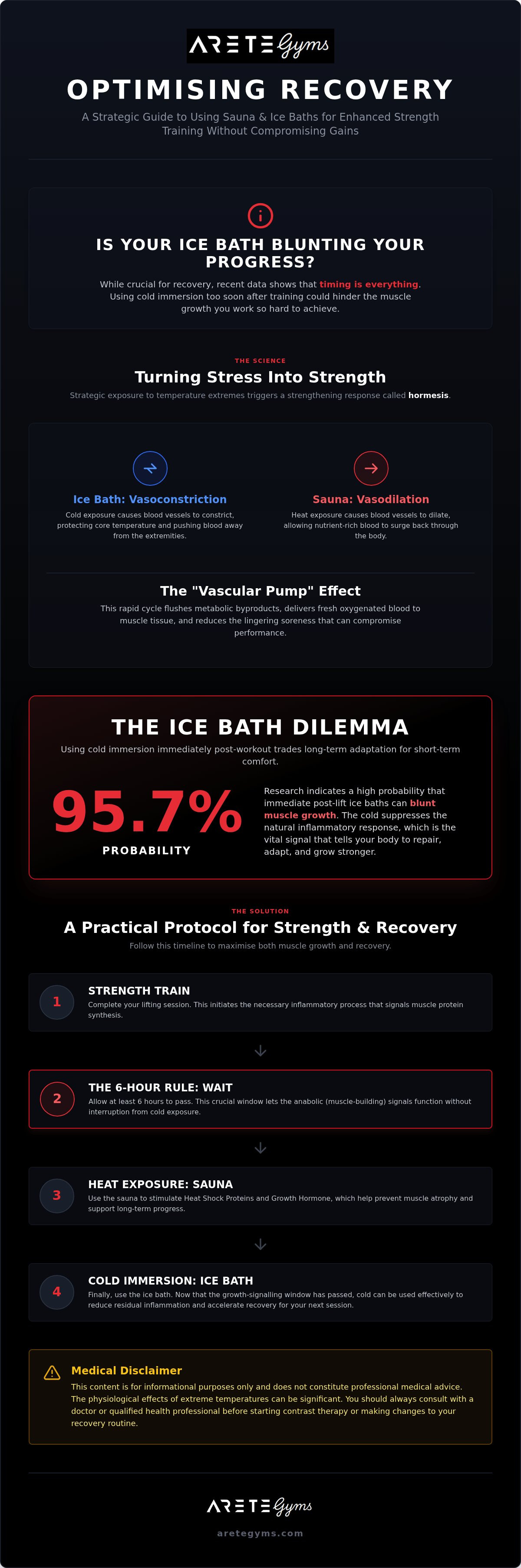
The human body is remarkably adept at turning stress into strength. This biological phenomenon, known as hormesis, occurs when a controlled dose of environmental stress triggers a protective and strengthening response within our cells. By exposing the body to deliberate heat and cold, we're training our physiological systems to become more resilient and efficient at repair.
Heat and cold work in tandem to create a "vascular pump" that flushes metabolic byproducts from the muscle tissue whilst delivering fresh, oxygenated blood to the areas that need it most, reducing the lingering soreness that often compromises performance in subsequent training sessions.
Defining Contrast Therapy for the Modern Athlete
The core mechanism behind Contrast bath therapy is the rapid transition between vasoconstriction and vasodilation. When you enter an ice bath, your blood vessels constrict to protect your core temperature. Upon moving into the sauna, those same vessels dilate, allowing blood to surge through the body. This rhythmic expansion and contraction acts like a manual pump for the lymphatic system, and also helps shift the nervous system from a sympathetic "fight or flight" state into a parasympathetic "rest and digest" state, where actual muscle repair occurs.
The Arete Philosophy: No-Ego Recovery
At our Aldgate facility, we view recovery as a disciplined practice that requires as much focus as the lifting itself. Our specialist sauna and ice bath suite is designed to be a calm, professional space where the focus is entirely on long-term sustainability.
The Ice Bath Dilemma: Does Cold Water Blunt Strength Gains?
Whilst cold water immersion is exceptionally effective at reducing delayed onset muscle soreness (DOMS), it achieves this by suppressing the natural inflammatory response. For a strength athlete, inflammation isn't just a side effect; it's the vital signal that tells your body to repair and grow stronger. A systematic review with meta-analysis confirms that using cold immersion too soon after a lifting session may trade long-term adaptation for short-term comfort.
The 6-Hour Rule for Strength Athletes
If your goal is building muscle and strength, the "6-hour rule" is a sensible guideline. Waiting at least six hours after your training session allows the body to initiate the necessary muscle-building signals without interference. Many of our members find that using the ice bath on dedicated rest days provides the best results.
When Cold is Your Best Friend
During high-volume "overload" weeks, the primary challenge isn't just muscle damage but central nervous system (CNS) fatigue. In these phases, an ice bath can help you reset, allowing you to maintain the intensity required for your next session. If you're ready to integrate these expert-led protocols into your routine, you can apply for a membership at our Aldgate facility.
Sauna Benefits: The Secret Weapon for Muscle Hypertrophy
While much of the modern conversation around recovery focuses on the cold, the sauna is arguably the most powerful tool for those chasing muscle growth. Exposure to high temperatures has been shown to trigger a growth hormone spike of up to 200%, which is vital for tissue repair and long-term muscle development. Heat exposure also improves insulin sensitivity, helping your body direct nutrients towards muscle cells rather than fat storage, and provides cardiovascular conditioning without adding extra mechanical load to your joints.
Heat Shock Proteins and Muscle Maintenance
Heat Shock Proteins (HSPs) are specialised molecules that act as cellular chaperones, identifying and repairing damaged proteins within muscle cells and preventing the protein degradation that typically follows a heavy lifting session.
Optimising the Sauna Session
Effective sessions typically last between 15 and 20 minutes at temperatures ranging from 80°C to 100°C. We recommend increasing your water and electrolyte intake throughout the day to ensure your body can handle the thermogenic stress safely.
A Practical Protocol for Strength and Recovery
For the London professional, the "Professional Peak" cycle is about balancing the high-stress environment of the City with the high-intensity demands of the gym. Monitoring your body's response is a vital skill: if you find yourself feeling "wired but tired" or noticing a drop in sleep quality, it may be time to scale back the intensity of your cold plunge or increase your time in the heat.
The Weekly Recovery Schedule
- •Day 1 (Heavy Lift): Use the sauna only. Avoiding the ice bath immediately after a heavy session preserves the anabolic signals needed for growth whilst the heat encourages blood flow.
- •Day 2 (Rest Day): Perform a full contrast cycle. Alternating between the sauna and the ice bath helps reset the central nervous system and flushes the lymphatic system.
- •Day 3 (Conditioning/Active Recovery): Utilise the ice bath. On days focused on movement rather than maximum strength, the cold helps manage systemic inflammation.
Mental Resilience and the 'Cold Dip' Mindset
Overcoming the initial shock of the ice bath builds a level of mental resilience that translates directly to better stress management in the boardroom. If you are ready to elevate your training and recovery, you can apply for a membership today.
Experience the Arete Recovery Suite in Aldgate
Located in the heart of Aldgate East, Arete Gyms provides a space where the science of recovery meets the reality of a busy professional life. By housing a specialist recovery suite within our main gym environment, we've eliminated the friction that often prevents athletes from prioritising restoration.
Our expert coaches integrate these tools directly into your small group personal training programme, advising you on whether to head to the sauna for a growth hormone boost or save the ice bath for a dedicated rest day.
Getting Started with Contrast Therapy
Our team is always on hand to guide you through your first session. We recommend bringing a towel, swimwear, and a water bottle to stay hydrated. You can book your sauna and ice bath session today and experience the Arete difference for yourself.
Frequently Asked Questions
Is it better to do the sauna or ice bath first for muscle recovery?
Starting with the sauna followed by the ice bath is the traditional sequence for contrast therapy, as it allows your blood vessels to dilate in the heat before the cold causes them to constrict, creating the vascular pump needed to flush metabolic waste.
How long should I stay in the ice bath after a strength session?
Research indicates that the optimal duration for cold water immersion is between 10 and 15 minutes at a temperature of 11 to 15°C. Waiting at least six hours after lifting ensures you don't interfere with the anabolic signalling required for muscle growth.
Will using the sauna every day help me build more muscle?
Daily sauna use doesn't build muscle directly, but it creates a physiological environment that is highly conducive to growth by consistently triggering the release of Heat Shock Proteins and boosting growth hormone.
Can I use the recovery suite if I have high blood pressure?
You must consult with a doctor or qualified health professional before using the sauna or ice bath if you have high blood pressure, as extreme temperature changes can cause rapid shifts in heart rate and vascular tension.
How often should a beginner use the ice bath and sauna?
Beginners should start with one or two sessions per week to gauge their body's response to thermal stress, increasing frequency as resilience and mental toughness improve.
Does contrast therapy help with fat loss as well as strength?
Contrast therapy supports fat loss indirectly by improving insulin sensitivity and metabolic health, helping your body direct energy towards muscle repair rather than fat storage.
Do I need to be a member of Arete Gyms to use the sauna and ice bath?
Access to our specialist recovery suite is a core benefit for our members in Aldgate East, allowing you to move from a small group session straight into the suite.